
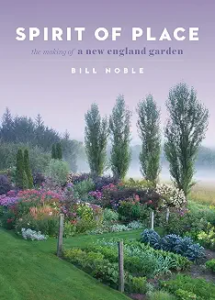
Spirit of Place: The Making of a New England Garden by Bill Noble 2020
I read “Spirt of Place” when it was published six years ago and in re-reading my review, I don’t think I can improve upon those initial reactions. Here’s that review:
I loved this book! I may be biased because we have come to know our Vermont neighbor, Bill Noble, over the last several years after hearing him lecture in Shelburne, Vt and then visiting his garden in Norwich several times. He was kind enough (after some begging!) to share his right hand associate with us, and she has worked side by side with me during the last few years in developing our own special place. Bill has even visited Brownsville and made several inspired suggestions. But back to the book. It’s terrific. Superb photos (all taken by Bill) which are unusual in that they are accompanied by the names of all the plants in the photo, detailed advice about ‘how to’, and lyrical prose about the philosophy that has motivated Bill’s garden development. Garden books tend to be either ‘how to’ books with excruciating details about compost, tilling, watering, etc. or broad photo studies of specific gardens. There are excellent examples of each genre based right here in VT- A Year at North Hill and Tasha Tudor’s Garden come to mind. This book combines the very best of both approaches. I stopped writing down the names of specific plants I wanted to try when I had filled two pages with microscopic printing, so there’s a plethora of great ideas for new plants for every kind of environment. Since Noble is a collector with widespread contacts, my guess is that trying to find most of these plants in your local nursery will be futile, but the search is half the fun. The real strength of the book, however, is Bill’s prose about why and how he gardens, ‘composing a landscape painting’ in order to ‘create a beautiful, memorable setting and then populate it with interesting and appropriate plants….a garden to live in, to cultivate, and to take pleasure in …”. Perhaps most impressive is how he has truly captured the extensive and multi-fold gardens that comprise his property. Leaf through this book to enjoy the photos and learn plant names; read it to understand the compulsion and delight that a real gardener feels for his creation. Whatever motivates you, and whether you know the difference between an Aralia and an Aruncus, read this book and enjoy and learn. Who knows, you may even decide to plant a garden.
What impressed me upon this second reading was Bill’s ability to meld the various traditions of garden writing—history, plants, gardening techniques, design, and love of the pursuit. This became clear from the beginning when he began with details of the gardens of the Cornish artists colony and then moved to the history of his house on Bragg Hill Road in Norwich. Not far into the book he shared his guiding principles for the garden and I think it was those principles that also guide my gardening, often in an attempt to capture Bill’s designs and principles. Here’s principle #1: “The garden should feel like a natural outgrowth of the place, harmonizing with its vernacular architecture and agricultural character. It should relate to the topograpy and natural features around it….”
There’s no doubt that knowing Bill personally, having visited his gardens several times, and working with his right hand person, Susan has made this book special, but I believe that anyone who likes to get their hands into the soil and/or loves the beauty of plants, flowers, trees, and the land will delight in this book.

