
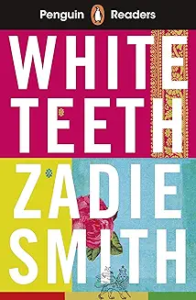
White Teeth by Zadie Smith 2000
Zadie Smith’s first novel, “White Teeth” was greeted with several major awards for first novel and a famous review by James Wood who referred to her style as hysterical realism. The review is quite long and extensive and well worth reading not just for its insights into Smith’s book but for Wood’s analysis of the big, sprawling contemporary novel. Written in The New Republic 26 years ago, it’s a terrific piece of literary criticism. ( .https://newrepublic.com/article/61361/human-inhuman)
I had read a number of Smith’s essay collections and had always intended to read her novels, so when “White Teeth” showed up as #25 on a BBC list of the “100 Greatest British Novels”, I was all in whilst we were in London. The novel, which felt very Dickensian to me, is replete with memorable characters from the two WWII veteran friends, the Brit, Archie Jones and the Bengali, Samad Iqbal to their wives, the Jamaican born Clara and the arranged marriage Bengali Alsana. We meet their children, Ire and the twins Magid and Millat, the Chelfens their intellectual, liberal, Jewish/Catholic neighbors in their North London Willendon, Jehovah Witnesses, radical Islamists, animal rights radicals, and regular old pub owners and domino players.
The plot takes twists and turns and eventually ends abruptly, but along the way Smith explores the dislocations and disruptions that result from immigration and the legacies of colonialism as well as the tension between assimilation and identity. Belonging is a central theme and its impossiblity is often represented by the eponymous white teeth of the British colonialists or the white teeth by which Africans are seen in the jungles so the Brits can kill them.
While often funny and ironic, the bottom line for Smith is that the plight of the uprooted, the dislocated, and the often clueless immigrant is a difficult if not impossible one. Education and aculturation which hold promise for integration in their new societies fails time and again as poverty and discrimination limit the potential options for the new generation as well as the old.
Smith writes with clever aplomb and the book was never dull. I look forward to reading “NW” (54th on the list) in the future as well as her new book of essays. I would also urge you to read James Wood’s review. It’s a terrific example of lit crit at its best.

