
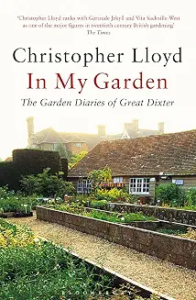
In My Garden by Christopher Lloyd 1994
I love to read gardening books at all seasons, so I added this 30 year old volume to the genre list this month. Books about gardens tend to fall into two categories—the ‘how to’ or ‘plant this there’ and the more philosophical books about garden history, design, social impact, etc.
Lloyd (1921-2006) is one writer who can combine both. One in a long list of British gardening experts (think Gertrude Jekyll, Edward Lutyens, Rosemary Verey, Vita Sackville-West, Margery Fish, et al), Lloyd’s garden at Great Dixter in East Essex was known for its thickly planted, labor intensive country style. The garden had been designed by Jekyll and Luytens at the request of Lloyd’s parents, and he continued their work with a large staff while also publishing several popular books on gardening.
This book divides the gardening year into the months, gathering 84 of his columns from the magazine ‘Country Life’ published from 1963 to the early ’90’s. The editor, Frank Ronan, describes Lloyd as follows: “It is rare that a garden writer can make you laugh; rarer still that this writer will be someone who really knows what he is talking about and is capable of imparting his knowledge to you, and, as far as I know, it is unique that the joke will be delivered in a beautifully made sentence.”
After reading “In My Garden”, I agree with Ronan. It’s entertaining, informative, funny at times, and quite candid. I loved his reflections on weeding (“Weeding in a methodical way is most enjoyable, but if I have it in mind to tackle a certain area, I have to approach it with three-quarters closed eyes, otherwise I shall be distracted by other weeds or tidying jobs en route and shall never reach my destination.”), visiting other gardens (“For the health of his mind, it is absolutely essential that every gardener should uproot himself from his own patch, now and again, to go and see how other people are doing it, what their problems and interests are, how they approach the subject of gardening and with what result.)”, the need to walk around one’s garden with clippers or a sharp knife (“You should always carry a small, sharp pocket knife around with you.”), and the beauty of the garden in winter (“I love my winter garden because of its silence and emptiness; the slow pace, not dead, not even merely ticking over—there is always a forward impulse—but a gentle stirring.”)
There was also one column in July which tells the story of finding a shoreline garden in Dungeness which turned out to be Derek Jarman’s. This English movie maker and author wrote about his garden in 1995 in “Derek Jarman’s Garden” shortly before he succumbed to AIDS. I would have loved to have witnessed the tightly buttoned Lloyd meeting the creative Jarman!
In addition to these wonderful literary touches, I delighted in the dozens of plant suggestions. There are three caveats in reading this book. First, Lloyd gardened in mild, rainy England and most of his recommendations are not hardy in zone 4-5 Vermont. Second, the plants’ names are also 30 years old, and many of them have changed or are no longer available in the trade. Finally, his Long Border stretched 115 yards in length and 15 feet in depth—bearing little resemblance to my own garden beds. Nonetheless, I’ll now spend hours checking those plants out on the internet. If one such reference bears fruit for next year’s garden here in Vermont, the read will have been of use as well as of pleasure.
As the garden season winds down, a book like this carries me through the fall season. Enjoy it as the cold descends upon us!

