
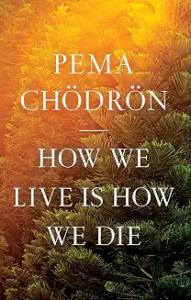
How We Live is How We Die by Pema Chodron 2022
Chodron, an American Buddhist nun, has written widely in the field of meditation, and I have found her books to be straight-forward, understandable, and helpful.
In “How We Live is How We Die”, Chodron addresses the fear, anguish, and anger that often surrounds fatal illness and dying, and makes a strong case that changing how we live can have a salutory effect on our final phase of life.
The book is way too heavy on Buddhist religious concepts, dwelling almost interminably on the bardo, the transition between life and reincarnation. The usual Buddhist lists (the Two Truths, the Three Steps to Courage, the Five Flavors of Wisdom, the Six Realms) are there in abundance and added little if anything to my embrace of her basic message.
Similarly, I didn’t find the concepts of the bardo, the kleshas (negative emotions of craving, anger, ignorance, jealousy, pride), the taglen (compassionate abiding), or the samsara (the route out of the bardo and into the next life) to be very useful or even interesting. What I did find very, very helpful is her basic message, however. If you live a life of kindness, calm, curiosity, openness and are aware of the impermanence of all life and its groundlessness, you are more likely to face death with equanimity. As she states, “My I, with ease and great happiness, let go of all attachments to this life as a son or a daughter returning home….So if you want to have a peaceful death, the best way to ensure that happens is to cultivate a peaceful mind while you’re still alive, to practice not getting so upset when unwelcome events enter your life.”
I loved her referring to the natural choreography of life and the fact that we are not in control. There are wonderful and terrible things that happen to everyone, and it is up to us to decide how to manage both the good and the bad with open awareness.
As always with meditation books, there is a continuous reframing of the same basic concepts, but Chodron’s metaphors and language are better than most. Hard to recommend this book because of all the Buddhist religious philosophy and particulars (talk to the dead person for 49 days to assure them they are dead, for example), but it provided solid advice for dying well.

