
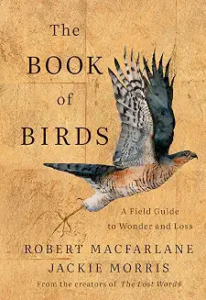
The Book of Birds: A Field Guide to Wonder and Loss by Robert Macfarlane and Jackie Morris 2026
This is quite a wonderful book featuring a powerful central theme, poetic writing, and beautiful art, all in the service of noticing, naming, knowing, wondering, caring, acting, and ultimately changing the situation of birds in today’s world.
Macfarlane is a British writer whose work focuses on the natural world. I’ve read three of his book, “The Old Ways”, “Landmarks”, and “The Lost Words” and found them intriguing and engaging. Morris is a writer and illustrator, and her previous collaboration with Macfarlane, “The Lost Words” was voted the most beautiful book of the year in 2016 by UK booksellers.
In this volume, they use the format of the traditional field guide methodology (common and Latin name plus illustrations of the egg and bird in flight and at rest), but on steroids. Macfarlane’s language is poetic, and Morris’s illustrations are fine art. Here’s an example of Macfarlane at work: “Woodcock: you’re a work of art in your own right—your plumage a flawless rendering of bracken fronds and crumpled leaves, of branch-barred shadows in mist and dusk, of speckled leaf litter, of gales, rain and equinoctial weathers, as if autumn had simply condensed on your feathers.” And he manages that level of beauty and vision for all 49 of the birds in this book, all of them chosen because they are on the Red or Amber Lists of conservation concerns, each among those birds who have “started the slow slide towards the absolute dark of extinction”
The book is divided into seven sections, each a ‘wonder’—nest, egg, beak, song, feather, flight, and migration—and each section includes seven birds. Along the way we learn fascinating facts–the shearwater logs 5 million miles of flight in its 15 year lifetime; the razorbill can dive to 600 feet below the surface of the ocean; the common tern migrates 50,000 miles a year; the term for a group of rooks is a ‘storytelling’ and a flock of starlings is called a ‘murmuration’. The tables at the end of the book provide additional fascinating facts—beak-to-rump length, wingspan, haunts and habitats, and average lifespan—and they are introduced by my favorite page, the one featuring the paintings of all the eggs.
Macfarlane and Morris have produced a powerful and beautiful paeon to birds with the goal of awakening our awareness of the threats to their very existence. There are three billion (yes, that’s billion with a ‘b’) fewer birds in North America than half a century ago! That amazing and distressing statistic has been evident in the quiet summer mornings at our Vermont home. Whereas 40 years ago, the mornings were full of birdsong, they are largely quiet today.
This volume is a far cry from the traditional coffee table book, though every bit as beautiful. Read it for the information, for the prose, for the paintings and get motivated to protect our feathered companions before it is too late.

