
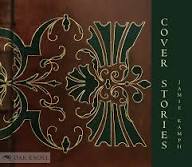
Cover Stories by Jamie Kamph 2025
This beautiful and engrossing book is a prime example of the value of browsing library shelves without any preconceived idea of what you are looking for.
I was at the Boston Atheneum last week. It is a unique combination of library, museum, and cultural center and one of the oldest private libraries in America founded in 1807. It is in its original beautiful building overlooking the cemetery in downtown Boston where Paul Revere, Samuel Adams, and John Hancock are buried. Through the generosity of a friend I was gifted a membershp some years back and have maintained it, visiting the library several times a year.
Last week while doing so, I noticed this book. I’ve always been fascinated by book covers and have been thrilled that The New York Times has added an annual Ten Best Book Covers to its annual lists. So when this book with its clever title appeared on a shelf, I was quick to check it out, and glad that I did so.
Jamie Kamph has been engaged in bookbinding for more than 50 years from her stone studio in New Jersey. She revisits some of her favorite projects in this beautifully photographed and well written exploration of the impact of a book’s cover and how the bookbinder goes about her craft.
Kampf ‘s ‘manifesto’ of bookbinding involves reading and rereading the book she is about to work on and making an ernest attempt to have the cover not only be structurally sound and protect the book, but enhance the author’s message and ideas. She is careful not to intervene in the reading experience, but in deciding about materials and style, she evokes the entirety of the text, its physical properties, and the political and historical context in which the book was written. She strives for “wanting to have my books feel good in hand, open easily, close convincingly”, and tries to anticipate the ‘basic ravages of time, choosing colors that will look good faded, paper that will wear well when fingered, tooling that will not fade away.”
She offers the readers more than 100 beautifully colored examples of her craft, featuring her favorite authors, Joyce, Conrad, Fitzgerald, James, Wharton, and Melville among others. Her work includes novels, non-recipe cookbooks, gardening books, and texts from Chaucer through Shakespeare all the way to Willa Cather.
I was introduced to an entirely new vocabulary—-the lexicon of bookbinding. Titling, signatures, guarding, cord formation, endpapers, postedorons, fly leaves, gold tooling, deacidifying, and mending holes in paper with something called Kitakatu where you line up the warp in the damaged paper with this textured tissue.
Reading this book is a fascinating and aesthetically pleasing experience. I’d urge you to skip the detailed text and simply enjoy the beautiful work that Kamph has done on these myriad books.
