
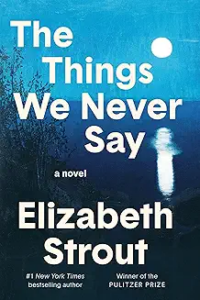
The Things We Never Say by Elizabeth Strout 2026
This book was recommended to me by my wife who asked me when I was about 1/3 into it how I was liking it. I replied “Meh” because at that point, I was still in the stage when Elizabeth Strout was putting the players into their places, arranging the stage, handing out their lines, and getting ready to start the action. Having finished the book this afternoon, I’m eager to tell my wife that I loved it.
I’ve read most of Strout’s earlier books about Olive Kittridge and the various characters in her Maine coastal town, and I’ve enjoyed all of them, but this book is different. It’s more philosophical, weighty, and far darker than the others. Suicide, adultery, lying, and depression seem to be nearly universal and the backdrop for all of this is the 2024 election of trump and the breakneck speed with which he is leading the country into a “national suicide”.
It’s always challenging to review a novel without detailing the plot and spoiling the reading experience for the reader of the review, but I’ll try. Strout has created one of her most memorable characters in Artie Dam, a 50ish school teacher of high school history. Artie worries about nearly everything: the political climate; his son who had been involved in a one car accident which killed his girlfriend and who’s marriage appears to be ending; his own suicidal ideation and low spirits; and finally about a secret his wife has been keeping from him for 35 years. Artie is a spectacular teacher, caring and supportive while also expecting his students to think and work. He’s also consumed by thoughts about free will and determinism and appears to be have some form of precognition.
At the end of the day, Artie concludes that “everything in the world seemed to be filled with unspoken truths….All the things in the world that people did not know about one another. Even those very close to them.” He goes on to think that “….now after all these years, he was finally becoming a grown up. What did he mean by that? That he was finally beginning to understand the multitudinous aspects of people. He was amazed ….that he had somehow missed this fact about every single person: that they held within themselves a vast, unknowable universe.” Earlier in the book, Artie returning from a neighborhood cocktail party wondered “Why don’t people ever say anything real”. Later he mulls that, “And now he knew why. Because to say anthing real was to say things that nobody wanted to know. Or if they wanted to know, they would not care in the right way. Or even understand. It was a private thing to be alive. He understood this now.”
I think this is Strout’s best book and bleakest as well. Artie Dam is one of her most realized characters. I won’t ruin the ending by sharing what happens to Artie but just know that Strout calls upon Virginia Woolf’s treatment of Mrs. Ramsey from “To the Lighthouse” in dealing with that question.
A very fine book, indeed.

